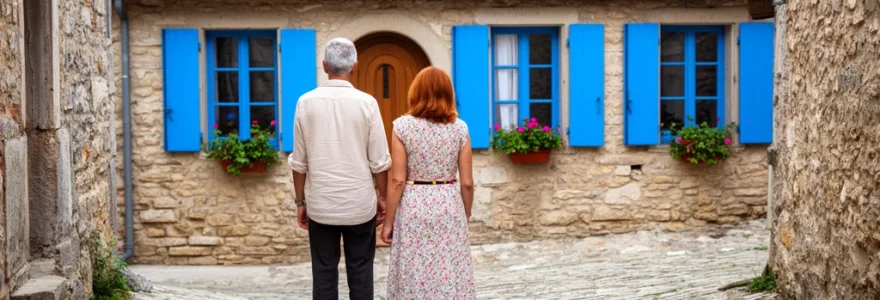
Last month, a retired couple from Hampshire sat across from me in tears. They’d spent eighteen months searching online, viewed twelve properties with three different agents, and still hadn’t found their French home. The problem wasn’t the market—it was the advice they’d been getting. Someone had convinced them the Dordogne was their only option, and they’d been looking at properties €80,000 above their comfortable budget.
I showed them a stone village house twenty minutes from Pompadour. Three bedrooms, a walled garden, habitable condition. €127,000. They completed two months later.
Limousin remains the region where budgets stretch furthest, where you can still find character without compromise. But finding the right property here requires knowing which villages work, which price brackets deliver genuine value, and where the hidden costs lurk. That’s what this guide covers—no romantic nonsense, just the practical truth from someone who lives and works here.
Limousin property: the essential numbers
- Current prices: €12,000 (land) to €245,000 (turnkey character property)
- Typical habitable village house: €80,000-€150,000
- Average price per square metre: below €1,200 across the region
- Buying timeline: 3-4 months from accepted offer
- Total transaction costs: 7-8% of purchase price for older properties
What this guide covers
Why Limousin remains one of France’s best-kept property secrets
The Dordogne gets the magazine features and the British expat community. The Lot has its dramatic valleys and premium prices. Limousin? It quietly delivers what those regions promised a decade ago—affordable stone properties, genuine rural France, and space to breathe.
1,200€/m²
Average property price per square metre in Limousin, versus €3,132 national average
According to Green Acres‘ 2025 market analysis, Limousin consistently shows average prices per square metre below €1,200—making it one of France’s most affordable regions for property buyers. The Haute-Vienne department recorded 137 transactions to UK buyers at an average price around €90,000. That’s not a typo.
What keeps prices low? Partly isolation—the nearest airport with regular UK flights is Limoges, and you’re looking at a solid day’s travel from London. Partly perception—Limousin lacks the instant name recognition of Provence or Brittany. But for buyers seeking space, quiet, and value? These factors work in your favour.
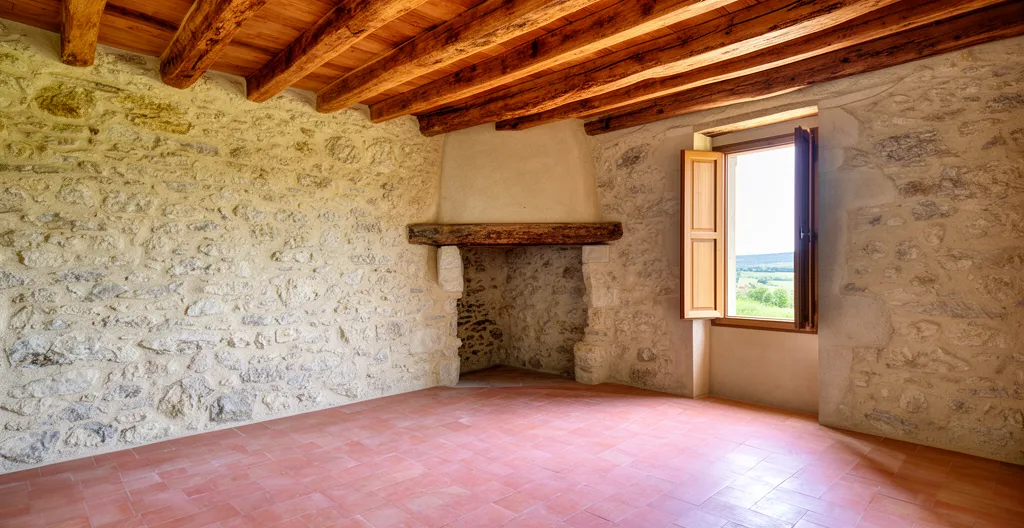
I’ve worked with buyers from across Europe—Dutch, Belgian, British—and the pattern repeats. They discover Limousin after exhausting their budget elsewhere. The stone houses here have the same thick walls, the same original fireplaces, the same character. They simply cost less.
What €50,000 to €250,000 actually buys you here
Online listings can mislead. A €65,000 stone house looks tempting until you realise the roof needs €40,000 of work. Let me break down what each price bracket genuinely delivers—and what it doesn’t.
| Budget | Property type | Typical condition | Additional costs to expect |
|---|---|---|---|
| €50,000-€80,000 | Stone barn or cottage requiring full renovation | Habitable? Rarely. Often no modern amenities | €50,000-€100,000+ for habitable standard |
| €80,000-€120,000 | 2-3 bedroom village house | Liveable but dated. Functional heating, basic kitchen | €10,000-€30,000 for modernisation |
| €120,000-€180,000 | 3-4 bedroom house with garden | Updated in last 15 years. Good condition throughout | €5,000-€15,000 for personal touches |
| €180,000-€250,000 | Character property with outbuildings or land | Move-in ready. Often professionally renovated | Minimal—perhaps landscaping |
Ready-to-live village houses: €100,000-€150,000
This bracket represents the sweet spot for most buyers I work with. You’re looking at genuine stone construction, typically two to four bedrooms, often with a garden or courtyard. The house won’t be new—expect original features, solid walls, and perhaps a wood-burning stove already installed.
Current listings show property for sale in Limousin across this exact range. A three-bedroom village house near Pompadour recently sold at €129,000: stone walls, modernised bathroom, functioning oil heating, small walled garden. Habitable from day one.
Complete France‘s location guide confirms price variations by department: Corrèze averages €742-€1,931 per square metre, Haute-Vienne €711-€1,993, and Creuse remains cheapest at €512-€1,161. A 100-square-metre house therefore ranges from roughly €70,000 in Creuse to €150,000 in prime Corrèze villages.
Renovation projects with potential: €50,000-€100,000
Soyons clairs: this bracket requires caution. I’ve seen buyers purchase a €55,000 stone barn expecting a quick conversion, then face €120,000 in renovation costs. The purchase price isn’t the budget—it’s the entry fee.
Renovation in France typically runs €800-€1,500 per square metre for standard specification. A 150-square-metre barn conversion therefore costs €120,000-€225,000 in building work alone. Add the purchase price and notaire fees, and your “bargain” barn becomes a €200,000 project.
That said, projects can work brilliantly for the right buyer. Someone I accompanied last year purchased a semi-ruined cottage for €42,000, renovated over three years using local artisans, and created a stunning three-bedroom home for under €160,000 total. He had time, building knowledge, and realistic expectations. Without all three? I’d steer you toward the ready-to-live bracket.
Land and building plots: €10,000-€70,000
Building plots in Limousin start around €10,000 for rural parcels and reach €70,000 for serviced plots in desirable villages. I rarely recommend this route for international buyers—French planning regulations, connection costs, and project management from abroad create complications that outweigh savings.
If you’re determined to build, budget €150,000-€250,000 for construction on top of land costs. And expect the process to take two to three years.
The villages I recommend to buyers (and the ones I don’t)
Generic guides list every commune in the region. I’d rather tell you where I actually send buyers—and where I suggest they avoid.
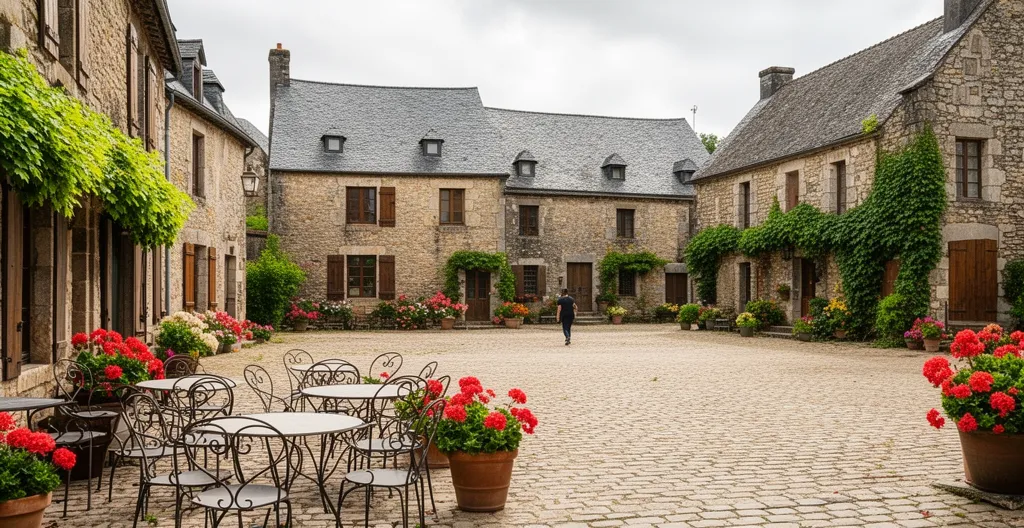
Pompadour area: the positives
- Good road links to Limoges and Brive (45 minutes either direction)
- Active village life with weekly markets
- Medical centre within 15 minutes
- Established British expat community for support
Pompadour area: the considerations
- Slightly higher prices than deeper Corrèze (popularity premium)
- Properties sell faster—less negotiation room
- Some villages feel “expat-heavy” in summer
Beyond Pompadour, I consistently recommend Ségur-le-Château for buyers seeking village atmosphere without isolation—it’s classified among France’s most beautiful villages, with cafés, a bakery, and community events. Saint-Yrieix-la-Perche offers more services (supermarkets, hospital) but feels less intimate. Coussac-Bonneval sits between the two: quiet but connected.
Villages I’d approach with caution? Anything more than thirty minutes from a market town. Winter populations drop dramatically in truly rural communes, and services contract accordingly. One buyer I worked with purchased a beautiful farmhouse near Meymac, then discovered the nearest medical centre was forty-five minutes away and the boulangerie visited twice weekly by van. She sold within eighteen months.
Before you fall in love with isolation
Limousin winters can feel long and quiet. If you’re coming from suburban Surrey or urban Manchester, the silence takes adjustment. Villages that feel charmingly peaceful in August can feel remote in February. I always suggest a winter viewing trip before committing—it reveals a property’s true character.
For those exploring investment opportunities in small towns, the Limousin villages I’ve mentioned combine affordability with genuine livability—a combination increasingly rare in French property.
The buying process: what to expect and what catches people out
I accompanied a client through purchase last year who’d been quoted “six weeks to completion” by another agent. Reality? Sixteen weeks, and that’s considered efficient. French property transactions follow their own rhythm, and understanding it prevents frustration.

-
Initial enquiry and property shortlisting
-
Viewing trip (plan 3-5 days minimum)
-
Offer accepted, notaire instructed
-
Compromis de vente signing + 10-day cooling-off period
-
Searches, surveys, and final checks
-
Acte de vente signing and key handover
According to Notaires de France‘s official guidance, acquisition costs for older properties run around 7-8% of purchase price. On a €120,000 house, that’s roughly €9,000 in fees—covering transfer taxes, notaire remuneration, and administrative costs. Budget this from the start; it’s non-negotiable.
The 10-day cooling-off period after signing the compromis de vente protects buyers absolutely. As UK Government guidance confirms, you can withdraw for any reason during this window without penalty. Use it if doubts emerge—I’ve seen buyers exercise this right, and while disappointing, it beats discovering problems post-completion.
Where deals commonly stall? The searches phase. French local authorities take their time responding to enquiries about planning restrictions, rights of way, and environmental concerns. August closures extend everything. If your timeline matters, avoid offers in June or July—administration effectively pauses until September.
Before entering negotiations, reviewing tips for negotiating your new home can prevent common missteps. French vendors expect negotiation but respond poorly to aggressive tactics. A respectful 5-10% reduction request usually succeeds; demanding 20% off rarely does.
A case that stayed with me: the drainage problem
I accompanied a retired couple from Surrey last year—their budget was €100,000 for a village house near Pompadour. They found a beautiful property at €95,000 and fell in love immediately. Character features, walled garden, original fireplace.
During the search phase, the notaire discovered undocumented drainage issues. The septic system didn’t meet current regulations, and remediation would cost €12,000-€15,000. The vendors refused to reduce the price. My clients walked away—painful after emotional investment, but correct. Within two months, they’d found an alternative in Coussac-Bonneval at €108,000. Better condition, proper drainage, no hidden costs. They completed three months ago.
Your questions about buying in Limousin
Your Limousin property questions answered
Can British citizens still buy property in France after Brexit?
Yes, without restrictions. Property ownership falls under French law, not EU regulations. You can purchase, own, and sell French property exactly as before Brexit. Visa requirements only apply if you wish to stay longer than 90 days in any 180-day period—ownership itself requires no permit or residency status.
Do I need to speak French to buy a house?
Helpful but not essential. You can appoint an English-speaking notaire anywhere in France at no additional cost—fees are split if two notaires handle the transaction. Estate agents in Limousin commonly speak English, and translation services are available for legal documents. That said, basic French dramatically improves village integration post-purchase.
Is Limousin too remote for comfortable living?
Depends on your expectations. Limoges offers urban amenities within 45 minutes of most Corrèze villages. Fibre broadband reaches many communes now—check specific addresses before purchase. Medical services exist but require driving; the nearest hospital might be thirty minutes away. If you’re comfortable with car-dependent rural life, Limousin works beautifully. If you expect walkable shops and public transport, it won’t.
What ongoing costs should I budget for French property?
Taxe foncière (property tax) varies by commune but typically runs €400-€1,200 annually for a standard village house in rural Limousin—considerably lower than urban France. Buildings insurance costs €300-€600 yearly. Heating expenses depend heavily on property condition and system type; budget €1,500-€3,000 annually for oil or wood heating in a typical stone house.
How do I find a reliable notaire?
The UK Government maintains lists of English-speaking French property professionals. Alternatively, ask your estate agent for recommendations—agents work repeatedly with local notaires and know who communicates well with international clients. Remember: the notaire represents the transaction, not you personally. For independent legal advice, consider a UK-based French property solicitor alongside the notaire.
Your next step toward Limousin
Before your first viewing trip: practical checklist
- Define your realistic total budget (purchase price + 8% fees + renovation buffer)
- Research currency transfer options—exchange rates significantly affect final sterling cost
- Shortlist 8-12 properties across your target villages before travelling
- Plan a minimum 4-day trip—rushed viewings lead to poor decisions
- Consider a winter visit if possible—properties reveal their true character in quieter months
Limousin won’t suit everyone. It demands acceptance of rural rhythms, comfort with driving, and willingness to build community from scratch. But for buyers seeking value, character, and genuine French village life? Few regions compete.
The couple I mentioned at the start? They moved in last spring. Their stone house needed new shutters and a kitchen refresh—work they completed themselves over six weeks. Total investment: €142,000 including fees and improvements. Their equivalent property in the Dordogne would have cost €220,000 or more.
They send photographs occasionally. Garden vegetables, village fêtes, morning coffee on the terrace. The French life they’d imagined, actually lived.
Important considerations before purchasing
This guide provides general information about the Limousin property market and cannot replace personalised legal advice. Property prices, taxes, and regulations may change; verify current figures before making decisions. Each purchase situation requires specific assessment by qualified French professionals.
Risks to consider: Unexpected renovation costs if structural survey not conducted; currency exchange fluctuations can significantly impact final purchase cost; non-compliance with French tax obligations can result in penalties.
Professional guidance recommended: French notaire, UK-based French property solicitor, and currency exchange specialist.